Library Programming for Youth With Special Needs – Welcoming Children and Families Affected by Incarceration into Public Libraries » Public Libraries Online

I found this link on the Resource Guide for Underserved Student Populations (AASL). I was particularly interested in the toolbox section providing resources for children of incarcerated parents, as I have done volunteer work with prison support organizations.

This is a very comprehensive guide on how to welcome children and families of incarcerated people, specifically into the public library. However, I think the programming ideas could easily be used in a school library setting.

As far as programming, the resource recommends tailoring existing activities and/or programs to address the specific community. I appreciated this approach, as it doesn’t feel particularly pointed or heavy-handed but does facilitate a feeling of inclusivity. For example, the website suggests that a pen-pal or letter writing event could be adjusted so the patron feels welcome writing a letter to an incarcerated family member. This would include providing tips on addressing the letter properly, or possibly making something available that defines what can or can’t be included in a letter (or package) to an incarcerated person.

It also suggests tailoring a book club, or book discussion meeting to involve reading materials (either for children or their caregivers) that cover the topic of incarceration specifically. These are also both good tips for educating the larger community about a specific population that often remains invisible.

Library Programming for Youth With Special Needs – Welcoming Children and Families Affected by Incarceration into Public Libraries » Public Libraries Online

Middle School Programming – Passive Doesn’t Mean Boring: 5 Passive Program Ideas for School Libraries

This is an interesting blog article from programminglibrarian.org that talks about “Passive Programming” ideas for tweens. I had only read this term in passing, so it was nice to see it in action! I also really like the idea of having activities set out in the library without the need for a specific event at a set time planned. It seems like a great way to make the library inviting at any time – more of a hangout spot.

Some of Kate’s (the librarian who blogged the article) passive programming ideas include bookmark making, trivia questions, zentangles, jigsaw puzzles, and customizable, giant crossword puzzles. 

“Passive programs can be a great way to regularly attract students into the library without having planned, specific events. Pick a corner of the library that can be designated for these drop-by activities, set out the supplies and some instructions, and let it go!”

Middle School Programming – Passive Doesn’t Mean Boring: 5 Passive Program Ideas for School Libraries

Elementary School Collection Development – 4 Tips for a Diverse School Library | NAESP

This is a short, but helpful resource for Elementary-age collection development. While it could definitely apply to all age groups, it was produced specifically by the National Association of Elementary School Principals.

image

There isn’t anything super different from what we’ve read in class so far (especially in the Naidoo text), but it does suggest some interest tips.

One is that the Junior Library Guild, which is a subscription service that sends a collection of books monthly to different public + school libraries, now has a specific “Multicultural Books” category.  Their website describes the collection as:

“…12 books that feature plot lines with ethnically and culturally diverse characters that may help foster an awareness and understanding of others.

Perfect for: Elementary readers seeking books about diverse characters and cultures”

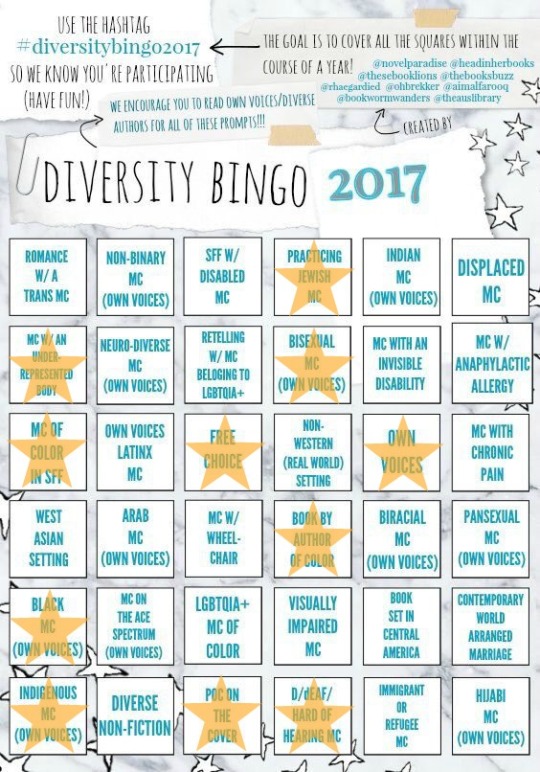
Another tip the article recommends is having your library participate in a diversity reading challenge. This would ensure that your elementary school library collection is covering all the right areas! They specifically name the Diversity on the Shelf challenge, which unfortunately I don’t think is happening anymore. However, I was curious about this and found a few more, such as this one & this really cool Diversity Bingo idea (it may include topics that would be harder to find in elementary-aged reading materials, but it could definitely be adapted for younger readers!)

image

Elementary School Collection Development – 4 Tips for a Diverse School Library | NAESP

Middle School Collection Development – Middle School Monday: Building a Middle School Public Library Collection, Part 1

This is a neat resource for Middle Grade collection development. It touches on a lot of the points that our class observed during our Community Analysis Reports. Namely, that in a lot of public libraries middle graders are “falling through the cracks” in terms of programming, resources, and collections. It seems like public libraries are focusing primarily on early literacy, and then jumping straight to an emphasis on teens.

This blog entry from YALSA talks about the importance of building a strong middle school public library collection, and makes a few interesting points as to why. First, the author claims that “childrens” books are getting older as a whole. This means that middle grade novels are increasingly edging toward “teen topics” such as serious relationships, drug use, and other heavy-hitting themes. This is leaving a hole in collections for actual materials that would appeal to middle graders. The issue with this is as follows:

If they cannot find books that speak to them, they may determine that books in general don’t speak to them.”

When you can’t figure out where to find books for your age group, it’s not only frustrating but can also leave you feeling lost as to where you belong at the library.”

image

This is a super important topic to consider, as no public library wants to lose this base of young, yet important readers. Plus, I loved that this librarian decided to name her middle grade collection “Middle Ground” – de-emphasizing a specific age demographic but at the same time highlighting its user base.

Part 2 of this Middle School Monday blog entry is also worth a read, as it goes much more into the specifics of selection criteria and the actual collection development process.

Middle School Collection Development – Middle School Monday: Building a Middle School Public Library Collection, Part 1