Elementary School Collection Development – 4 Tips for a Diverse School Library | NAESP

This is a short, but helpful resource for Elementary-age collection development. While it could definitely apply to all age groups, it was produced specifically by the National Association of Elementary School Principals.

image

There isn’t anything super different from what we’ve read in class so far (especially in the Naidoo text), but it does suggest some interest tips.

One is that the Junior Library Guild, which is a subscription service that sends a collection of books monthly to different public + school libraries, now has a specific “Multicultural Books” category.  Their website describes the collection as:

“…12 books that feature plot lines with ethnically and culturally diverse characters that may help foster an awareness and understanding of others.

Perfect for: Elementary readers seeking books about diverse characters and cultures”

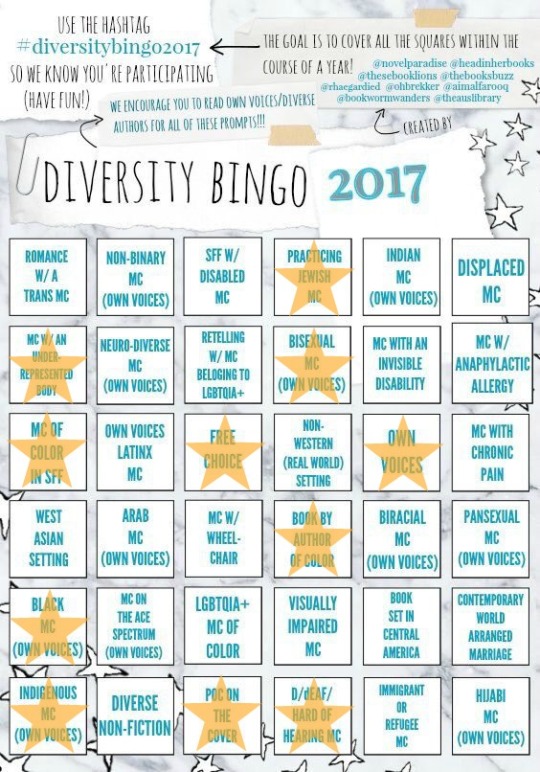
Another tip the article recommends is having your library participate in a diversity reading challenge. This would ensure that your elementary school library collection is covering all the right areas! They specifically name the Diversity on the Shelf challenge, which unfortunately I don’t think is happening anymore. However, I was curious about this and found a few more, such as this one & this really cool Diversity Bingo idea (it may include topics that would be harder to find in elementary-aged reading materials, but it could definitely be adapted for younger readers!)
image

Elementary School Collection Development – 4 Tips for a Diverse School Library | NAESP
Middle School Collection Development – Middle School Monday: Building a Middle School Public Library Collection, Part 1

This is a neat resource for Middle Grade collection development. It touches on a lot of the points that our class observed during our Community Analysis Reports. Namely, that in a lot of public libraries middle graders are “falling through the cracks” in terms of programming, resources, and collections. It seems like public libraries are focusing primarily on early literacy, and then jumping straight to an emphasis on teens.

This blog entry from YALSA talks about the importance of building a strong middle school public library collection, and makes a few interesting points as to why. First, the author claims that “childrens” books are getting older as a whole. This means that middle grade novels are increasingly edging toward “teen topics” such as serious relationships, drug use, and other heavy-hitting themes. This is leaving a hole in collections for actual materials that would appeal to middle graders. The issue with this is as follows:

If they cannot find books that speak to them, they may determine that books in general don’t speak to them.”

When you can’t figure out where to find books for your age group, it’s not only frustrating but can also leave you feeling lost as to where you belong at the library.”

image

This is a super important topic to consider, as no public library wants to lose this base of young, yet important readers. Plus, I loved that this librarian decided to name her middle grade collection “Middle Ground” – de-emphasizing a specific age demographic but at the same time highlighting its user base.

Part 2 of this Middle School Monday blog entry is also worth a read, as it goes much more into the specifics of selection criteria and the actual collection development process.

Middle School Collection Development – Middle School Monday: Building a Middle School Public Library Collection, Part 1

Elementary School Programming – Ready, Set, Kindergarten is now on your phone!

image

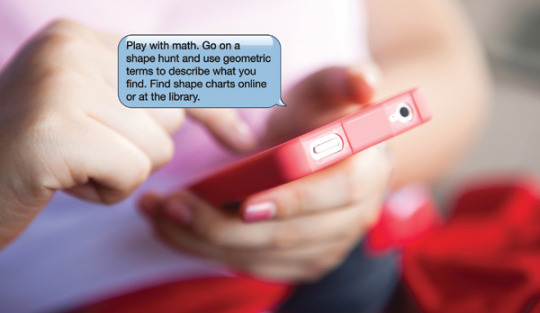
I though that this texting initiative, offered by the Brooklyn Public Library, was a super cool early childhood resource and idea!

The initiative was developed as part of BPL’s early education program Ready, Set Kindergarten!, which is a multi-session series of stories and activities, designed to develop early learning practices.

The premise of the idea is that parents sign up to receive text messages on their phone (during times that they’re most likely to be with their child), that include tips on learning different literacy and early education skills. An example text message would be:

“Find a time to read with your child every day, at a time that works for your family.”


The library studied different text initiatives when developing the program, like

NYC Department of Education’s Pre-K On the Go.

Research surrounding educative texting programs found that “these children did better on literacy tests than children whose parents didn’t receive early literacy tips via text. The texts were reaching parents when they were likely to be with their kids and able to act on the suggestions.”

Elementary School Programming – Ready, Set, Kindergarten is now on your phone!

Collection Development for Early Childhood – Ready to Read Resource Center

image

Another link I found relating to early childhood collection development is to this great non-profit called Ready to Read Resource Center. Coming from a more rural community in Montana (we did have a public library – but it was small!), I was curious about other rural communities with more limited literacy resources, smaller library, and fewer public libraries, and consequently how they might look at collection development a bit differently.

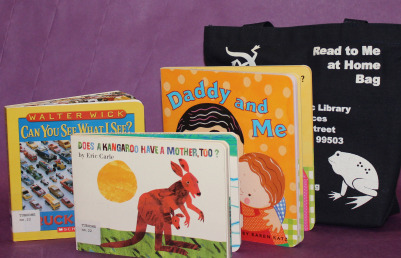
There are a few different literacy organizations with similar names, but this particular one works specifically with the Alaska Public Library system! The center was born through a partnership between the Anchorage Public Library & the Alaska State Library in 2006. Their website describes their service as promoting early literacy development to Alaska’s pre-K children. They do this by loaning free reading kits to organizations (primarily libraries, but in the case of towns that don’t have a public library the kits can be leant directly to caregivers and/or parents). Within Anchorage, kits can be borrowed directly from the library, and in towns with smaller public libraries they can be requested through Interlibrary Loan. There are a few different kits available, ranging from lapsit bags with 5 or 6 books, to ‘Ready to Read’ tubs with up to 50 books.

The organization also advocates for early literacy by “giving presentations to caregivers and early childhood organizations.”

“Many rural Alaskan communities have no bookstores or libraries and those communities that do have libraries, even in urban areas, may not find adequate collections of books for infants and toddlers as these collections are expensive to maintain.” – Ready to Read Resource Center

Overall I thought this was a really interesting variation on collection development, offering an option of less permanent collections for libraries and communications with much more limited resources.

Collection Development for Early Childhood – Ready to Read Resource Center

Early Childhood + Elementary Programming – Drag Queen Story Time

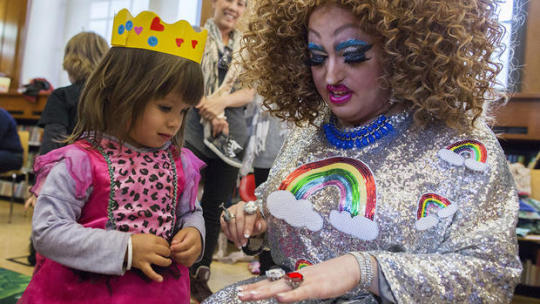
I love love love the idea of NYPL’s Drag Queen Story Time. Having moved from small-town Montana to the extremely diverse + inclusive Bay Area, and now to New York City (where you can hear 5 different languages spoken in one subway car) I don’t think I can ever live somewhere again that doesn’t offer even a taste of progressive children’s programming such as this. This is an amazing way to help prevent the bullying and marginalization of LGBTQ people in our communities, starting from the earliest ages! I believe this program originated at NYPL, but it has now expanded to different cities and venues!  

NYPL describes the programming as:

“A program for children aged 3-8 that raises awareness of gender diversity, promotes self-acceptance, and builds empathy through an enjoyable literary experience. In this 45-minute program, a drag queen trained by children’s librarians reads picture books, sings songs, and leads children in a simple craft activity. Children love the bright colors, glamorous outfits, and larger-than-life personalities of the drag queen performers, but more importantly, DQSH teaches children to accept and celebrate gender diversity in themselves and others, and helps to curb bullying of LGBTQ children.”

Related Links:

https://www.nytimes.com/2017/05/19/style/drag-queen-story-hour-puts-the-rainbow-in-reading.html

https://www.nbcnewyork.com/news/local/drag-queen-story-time-library-binghampton-new-york-controversy-468471103.html


image

Early Childhood + Elementary Programming – Drag Queen Story Time